SIX
See It Work · Book 05 · AI Agents for HR & Talent · Chapter 3
From 1,500 hours of screening to 15 minutes
The recruiting bottleneck is volume: 9,000 applications is a pile no recruiter can read closely. A recruiting agent screens them in minutes — the first pass that consumed roughly 1,500 hours of recruiter time collapses to fifteen. Your recruiters stop triaging resumes and do what they were hired to do: judge the shortlist and build relationships.
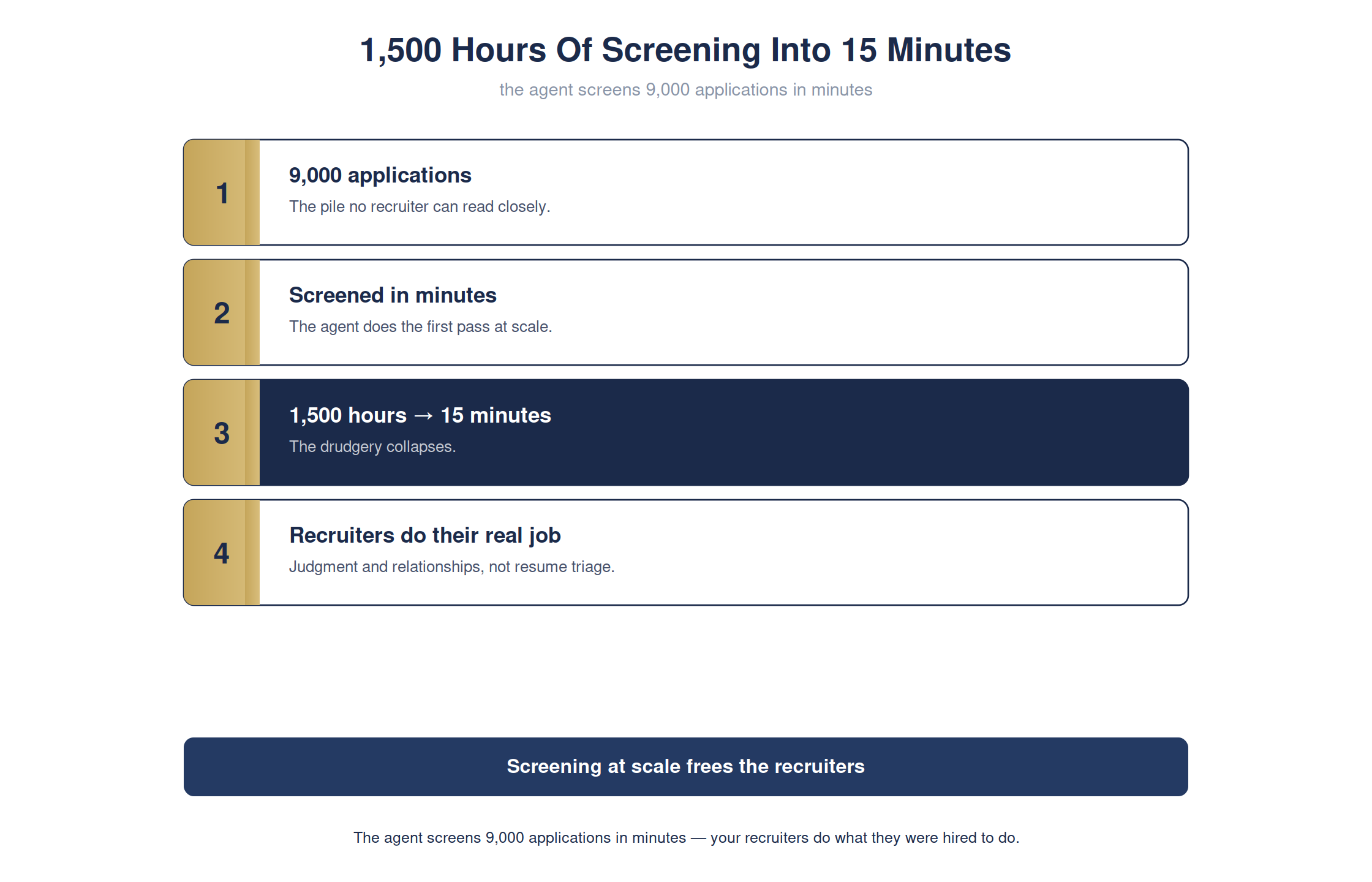
The full detailed chart. Condensed for print legibility in the book; shown here at full size.
Resume triage is the lowest-value, highest-volume work in recruiting — and it's where recruiters spend most of their time. Automating the first pass returns them to the human judgment that's the actual job.
CHRO's desk · recruiting agentready
The high-volume first pass collapses to minutes:
Recruiting Agent
applications9,000
screened inminutes
first pass1,500 hours → 15 min
recruitersdo their real job
The agent screens 9,000 applications in minutes — your recruiters do what they were hired to do.
For the technical reader — the command, and how to verify it yourself
# one line · you do not need to run this
see walkthrough
see walkthrough
see walkthrough
# -> thousands of applications screened in minutes, recruiters freed for judgment
# -> thousands of applications screened in minutes, recruiters freed for judgment
Full step-by-step is in Appendix RX: Hands-On Demonstrations in the book.