SIX
See It Work · Book 07 · AI Agents for Sales & Revenue · Chapter 4
The agent doesn't ask the rep how the deal's going — it reads the data
Pipeline forecasts built on rep self-reports are built on optimism. The agent does not ask the rep how the deal is going — it looks at the data and forms its own assessment: engagement, momentum, buying signals, stage velocity. The result is a pipeline view based on what's actually happening, not on how a rep feels about it.
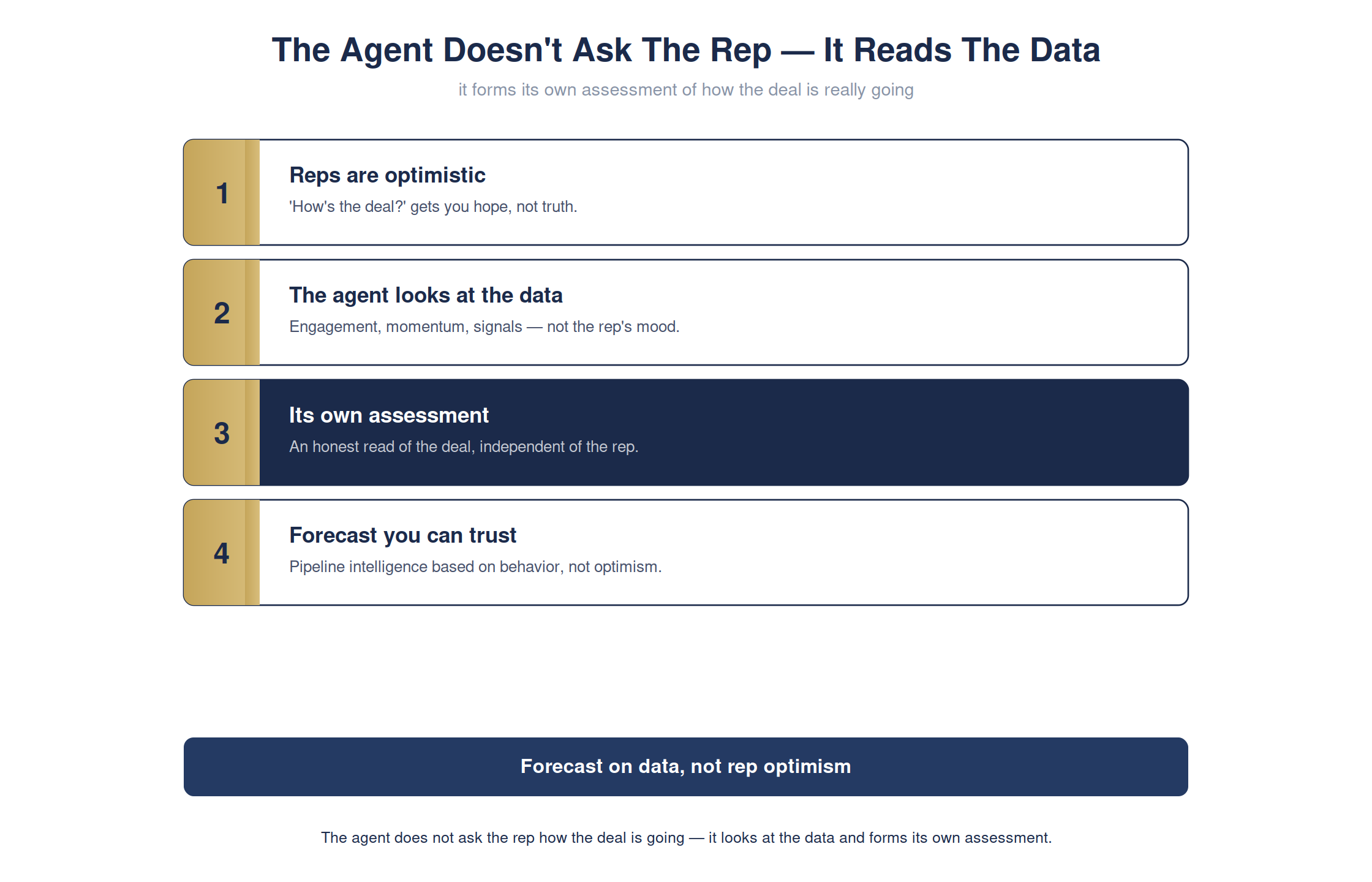
The full detailed chart. Condensed for print legibility in the book; shown here at full size.
Rep optimism is the single biggest source of forecast error. An independent, data-based assessment of every deal is what turns a hopeful pipeline into a trustworthy one.
Sales floor · pipeline intelligenceready
Each deal is assessed from data, independent of the rep:
Pipeline Intelligence
repsreport optimism
the agentreads the data
outputits own assessment
forecaston behavior, not hope
The agent does not ask the rep how the deal is going — it looks at the data and forms its own assessment.
For the technical reader — the command, and how to verify it yourself
# one line · you do not need to run this
see walkthrough
see walkthrough
see walkthrough
# -> a pipeline assessed from deal data, not rep optimism
# -> a pipeline assessed from deal data, not rep optimism
Full step-by-step is in Appendix RX: Hands-On Demonstrations in the book.