SIX
See It Work · Book 10 · Scaling AI Agents · Chapter 1
The 40 agents nobody owned
Agents are sprawling across finance, ops, and support — half of them built on someone's personal account. Nobody can answer the board's question: who owns what, and what can it touch? Watch the first one get a governed identity.
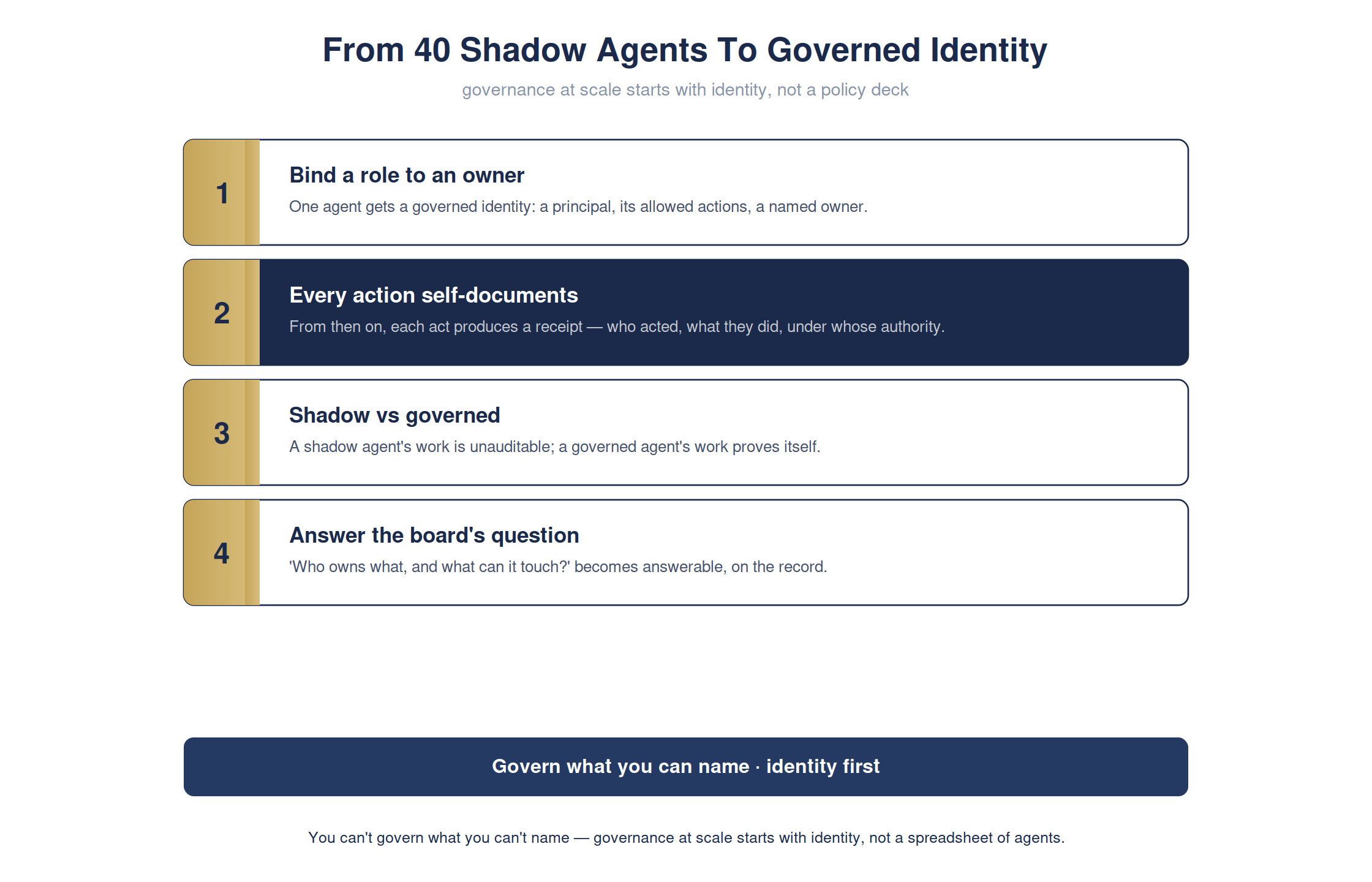
The full detailed chart. Condensed for print legibility in the book; shown here at full size.
This is the pilot trap in one image: pilots multiply faster than governance, and the org loses track. The fix isn't a spreadsheet of agents — it's giving each one an identity that self-documents every action.
Platform Console · live agent sessionready
That binding was an agent action — so it left a record. Here's the receipt that turns a shadow agent into a governed one:
Role-Binding Receipt
bound_rolefinance_reviewer
principal_idyour node identity
allowed_actionproduce_forecast_artifact
ownerassigned
attestedtrue
Every governed agent produces this same shape, every time — which is what makes a 40-agent fleet auditable instead of a liability.
For the technical reader — the command, and how to verify it yourself
# one line · you do not need to run this
python examples/load_role_demo.py
python examples/load_role_demo.py
jq '.compliance_attestation.summary.action_class' memory/LoadRoleDemo_summary.json
# -> the role's allowed action class
# -> the role's allowed action class
Full step-by-step is in Appendix RX: Hands-On Demonstrations in the book.