SIX
See It Work · Book 11 · AI Agents for M&A · Chapter 7
A valuation is a range, not a number
Valuation is where numbers meet judgment. A static model produces one number and hides how wrong its assumptions could be — which is exactly where overpayment risk lives. The valuation agent runs 1,000 scenarios with varying assumptions simultaneously and produces three parallel valuations (low, base, high) plus a sensitivity analysis showing what moves them.
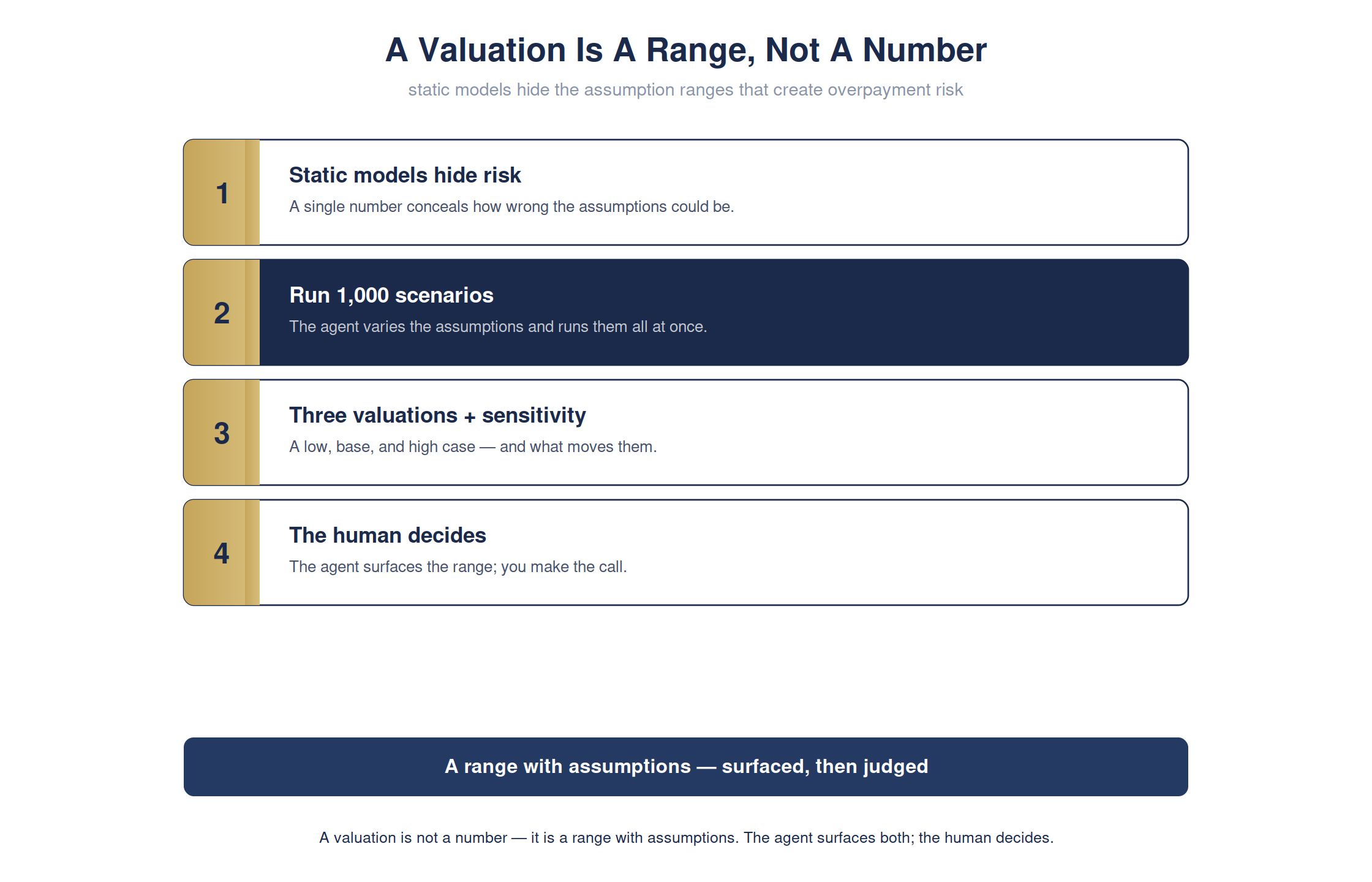
The full detailed chart. Condensed for print legibility in the book; shown here at full size.
A single valuation number invites overpayment because it conceals its own fragility. A range with visible assumptions shows you exactly how much room for error you have — and where the deal breaks.
Deal room · automated valuationready
The agent turns one fragile number into a judged range:
Automated Valuation
static modelhides overpayment risk
agentruns 1,000 scenarios
outputlow / base / high + sensitivity
the humandecides where to act
A valuation is not a number — it is a range with assumptions. The agent surfaces both; the human decides.
For the technical reader — the command, and how to verify it yourself
# one line · you do not need to run this
see walkthrough
see walkthrough
see walkthrough
# -> a valuation as a judged range of 1,000 scenarios, not one number
# -> a valuation as a judged range of 1,000 scenarios, not one number
Full step-by-step is in Appendix RX: Hands-On Demonstrations in the book.