SIX
See It Work · S2 Vol 1 · Sovereign Inference & Memory · Chapter 2
Sensitive data can never leak — because the road out is closed
Not every job should run on the same AI. The system sorts each one into three lanes by how sensitive it is: GREEN (routine — goes to a cheap, fast AI), YELLOW (needs judgment — goes to your own high-end AI, with your approval), and RED (your most sensitive material — stays on an AI running on your own machines, never sent out over the internet).
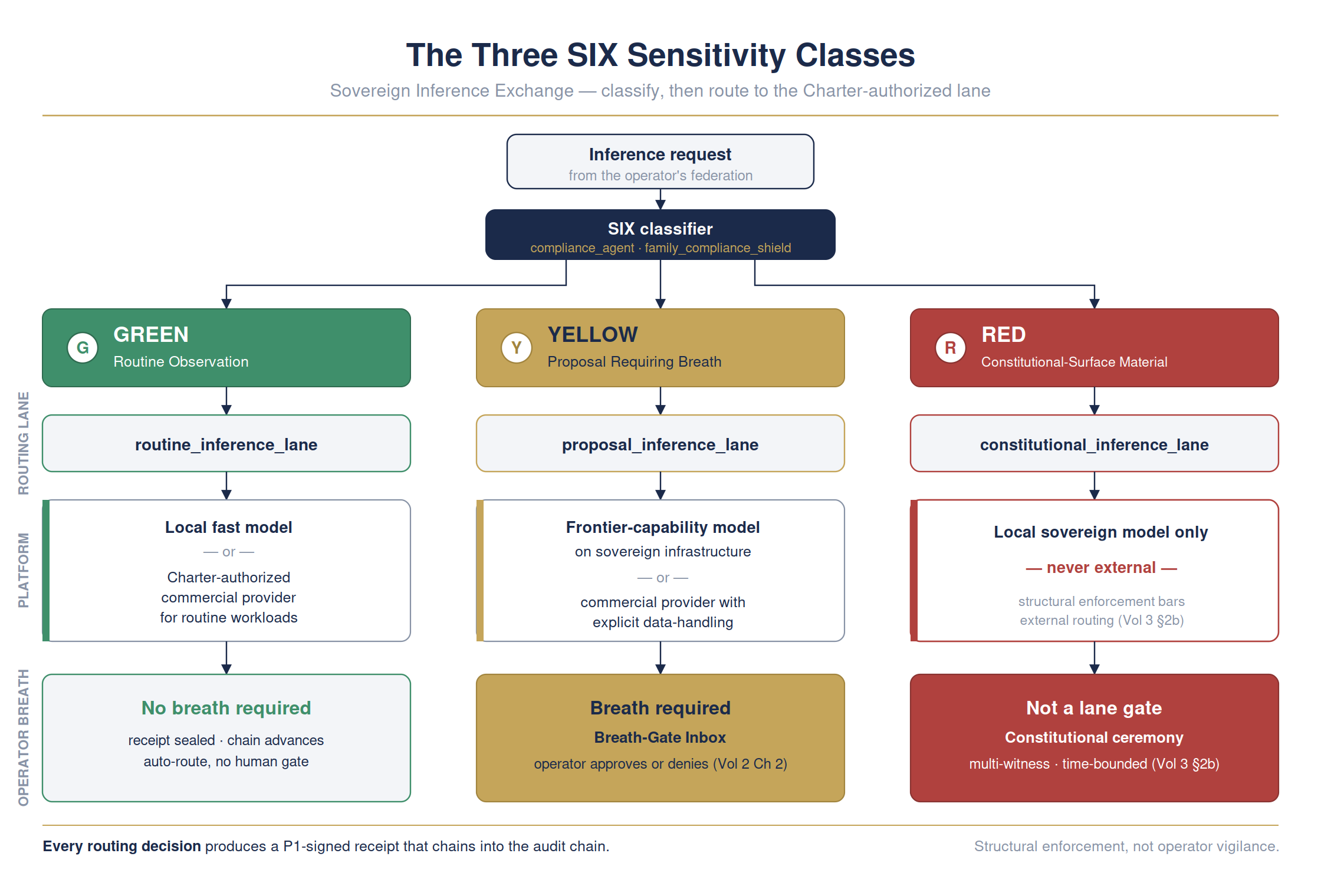
The full detailed chart. Condensed for print legibility in the book; shown here at full size.
Here's the key: RED data isn't kept safe by you remembering to be careful. The path that would send it to an outside AI is simply not built — so it can't happen, even by mistake. Once the data's in your own hands, your judgment takes over.
The sorting gate · liveready
The sorting decision is itself a tracked action, so it leaves a receipt:
Routing Receipt
sensitivity labelRED
laneyour machines only
sent to an outside AI?impossible — no such path
receiptsigned & recorded
Every job you route produces this shape — which is how a year of AI work becomes an audit trail instead of a pile of leaks waiting to happen.
For the technical reader — the command, and how to verify it yourself
# one line · you do not need to run this
see walkthrough
see walkthrough
./bl-verify
# -> the trust layer the routing receipts chain to
# -> the trust layer the routing receipts chain to
Full step-by-step is in Appendix RX: Hands-On Demonstrations in the book.