SIX
See It Work · S2 Vol 3 · Governed Dev Loop · §4 · Catching the Slow Drift Before It Moves a Line
Catch the slow drift before a boundary quietly moves
The drift that hurts you is the slow kind: small changes, period after period, until one day a boundary has quietly moved and you find out too late. Here the system catches the drift before it crosses the line — a correction, not a crisis — and the safeguard is handed down to whoever comes after you.
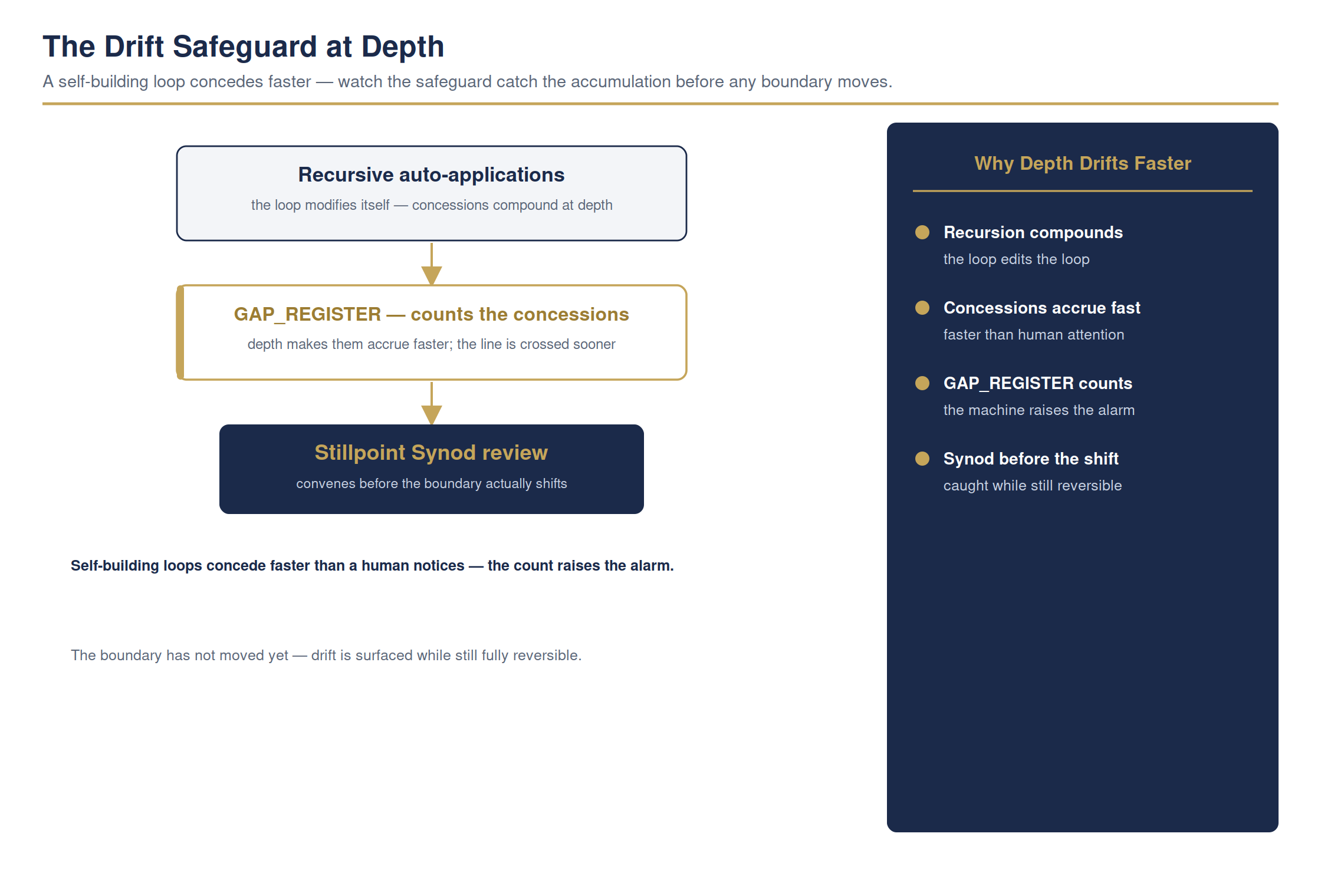
The full detailed chart. Condensed for print legibility in the book; shown here at full size.
By the time slow drift is obvious, the damage is done. Catching it early is the difference between a quick fix and a quiet failure you discover months later.
Your machine · the drift catcherready
The demo catches the drift before the line moves:
The Drift, Caught Early
the driftspotted early
the linedid NOT move
flagged fora quick review
resulta correction, not a crisis — and inherited
You write the rules. The AI can't quietly change them. Every handoff is on the record. And drift gets caught early.
For the technical reader — the command, and how to verify it yourself
# one line · you do not need to run this
python examples/family_governance_demo.py
python examples/family_governance_demo.py
python examples/family_governance_demo.py
# -> the drift is caught and noted before any boundary moves
# -> the drift is caught and noted before any boundary moves
Full step-by-step is in Appendix RX: Hands-On Demonstrations in the book.