SIX
See It Work · S3 Vol 3 · Helix · Chapter 4
Every change is checked against the rules — before it ships, not after
The order is the point. A check that runs after something ships is a post-mortem. Helix runs it before. Every render comes out as one of three things: GREEN (passed every rule → goes to human preview), YELLOW (passed the hard rules, soft flag → proceeds, flagged), or RED (broke a rule → does not proceed; named in plain words, fixed at the source).
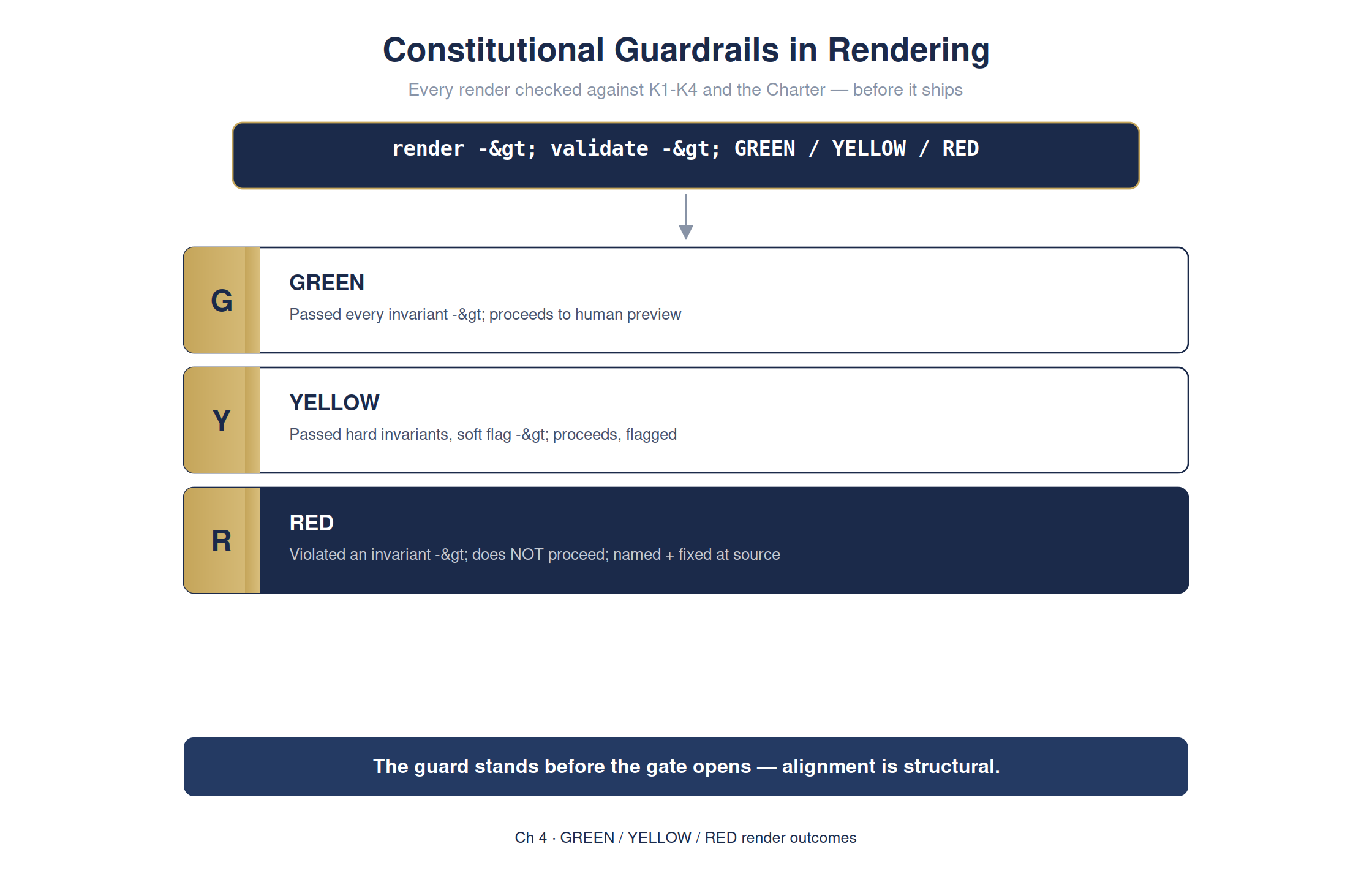
The full detailed chart. Condensed for print legibility in the book; shown here at full size.
This makes alignment structural, not a matter of anyone remembering to be careful. The guard stands before the gate opens. A change that can't pass the rules simply can't ship — and when renders genuinely conflict, a human-witnessed step decides it on the record, never silently.
A RED, caught at the gateready
Here's a real refusal from this build — a change stopped by a rule before it committed:
Refused by the rule
the changeclosing a sign-off
evidence offereda bare claim (insufficient)
rule outcomeREFUSED before commit
after real proof suppliedpassed + sealed
The invariant refused the change until real, resolving evidence existed. Structure, not advice.
For the technical reader — the command, and how to verify it yourself
# one line · you do not need to run this
see walkthrough
see walkthrough
render -> validate -> GREEN / RED
# -> a rule that stops a bad change before it ships
# -> a rule that stops a bad change before it ships
Full step-by-step is in Appendix RX: Hands-On Demonstrations in the book.