SIX
See It Work · S3 Vol 3 · Helix · Chapter 7
When the backend drifts from the book, the system says so — out loud
A perfect first render isn't the goal; a backend that stays faithful across years of change is. Sources get edited, services upgraded, the world moves — any of it can open a gap between what the book says and what the backend does. The drift score measures that gap, continuously.
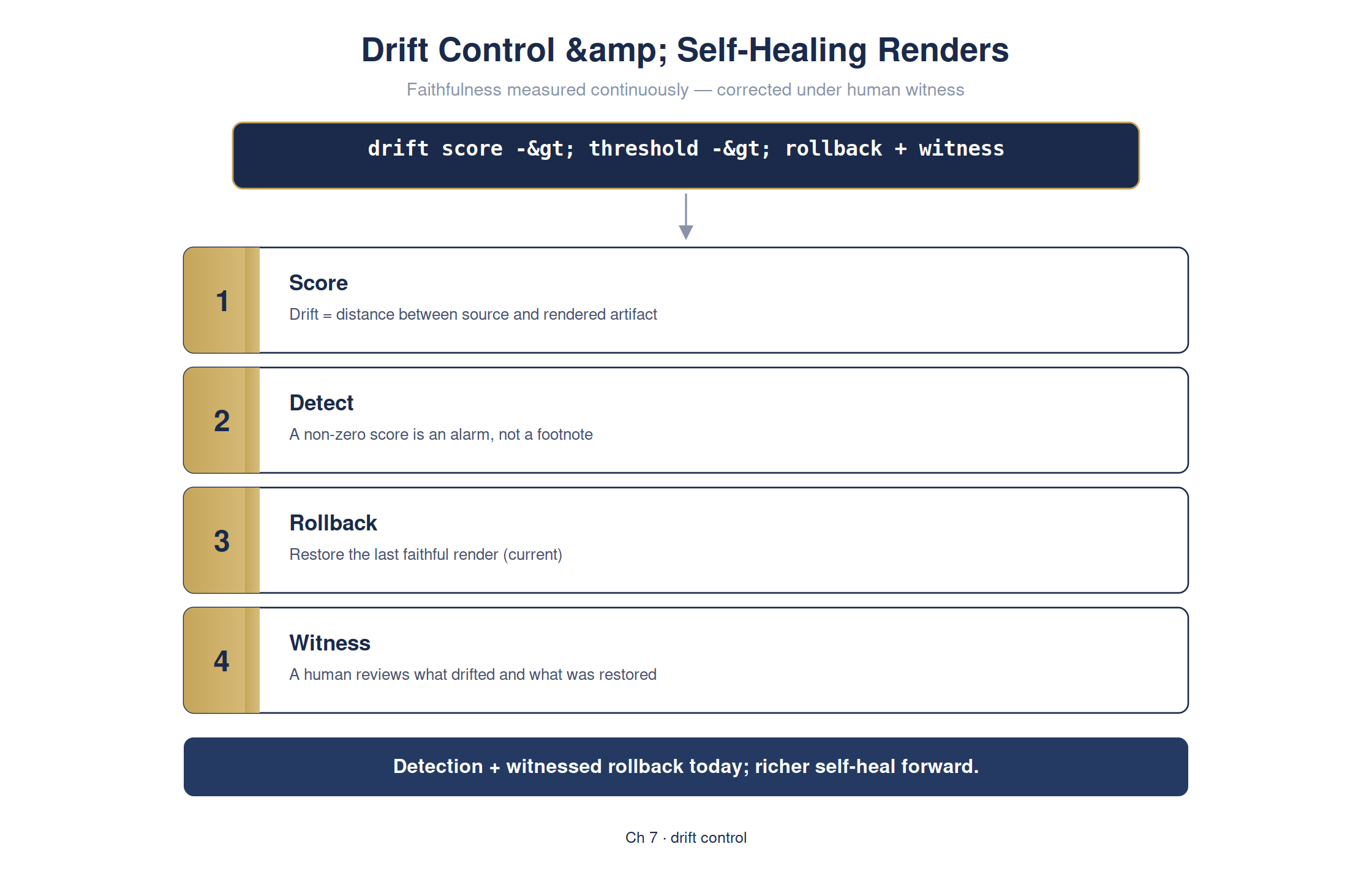
The full detailed chart. Condensed for print legibility in the book; shown here at full size.
A non-zero drift score is an alarm, not a footnote. When it fires, Helix restores the last faithful render automatically — and surfaces the event for a human to reconcile. The healing is automatic; the witness is human. No correction happens behind your back.
Drift, caught the instant it opensready
Here's the drift discipline — measured, caught, witnessed:
Drift, measured and caught
faithfulnessa number, measured every render
a non-zero scorean alarm, not a footnote
responserollback to last faithful render
every correctionwitnessed by a human
The same discipline that refuses a faithful-looking backend with measured drift behind it.
For the technical reader — the command, and how to verify it yourself
# one line · you do not need to run this
see walkthrough
see walkthrough
drift score -> rollback + witness
# -> drift caught the instant it opens, healed under human witness
# -> drift caught the instant it opens, healed under human witness
Full step-by-step is in Appendix RX: Hands-On Demonstrations in the book.