SIX
See It Work · S3 Vol 3 · Helix · Appendix D
"Isn't this just code generation with extra steps?"
Code-generation tools produce plausible output, differently each run, that no one can verify afterward. Helix renders deterministically — the same source yields the same artifact, byte for byte — and seals a receipt on every one. The "extra steps" are the validation, the gate, and the receipt.
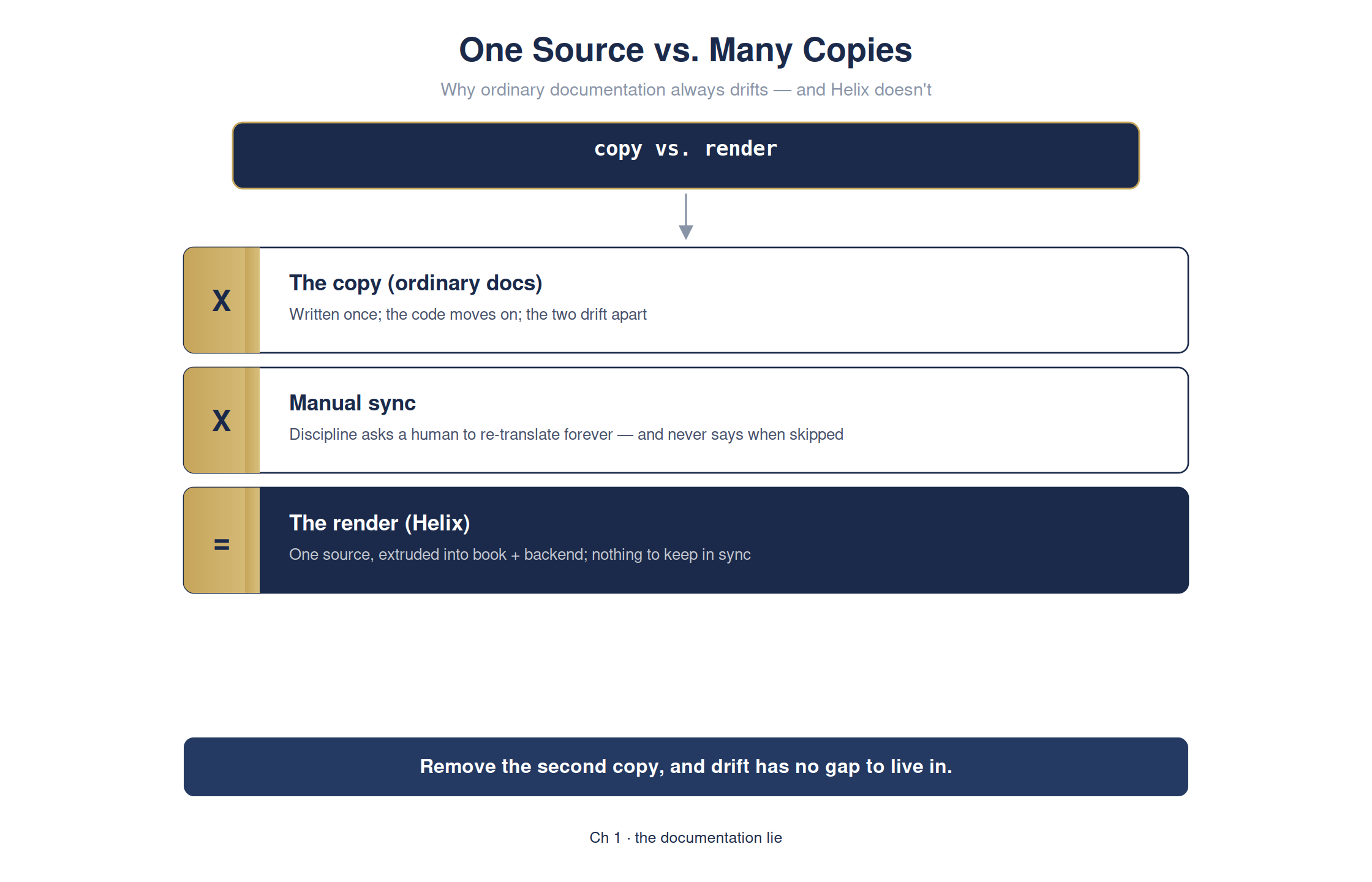
The full detailed chart. Condensed for print legibility in the book; shown here at full size.
Those steps are not overhead — they are the entire reason the result can be trusted by someone who wasn't there. A render you can re-run and a receipt you can check are the difference between output that is merely produced and output that is provable.
The skeptic's questionready
Here's the honest difference, side by side:
Code-gen vs. Helix
ordinary code-genplausible, different each run, unverifiable
Helix rendersame artifact every time
every artifactsealed with a checkable receipt
the differenceproduced vs. provable
A claim you can run yourself is a claim you never have to trust.
For the technical reader — the command, and how to verify it yourself
# one line · you do not need to run this
see walkthrough
see walkthrough
determinism + receipt
# -> provable output, not plausible output
# -> provable output, not plausible output
Full step-by-step is in Appendix RX: Hands-On Demonstrations in the book.