SIX
See It Work · Book 03 · Leading AI Agents · Chapter 5
Decide who's accountable before the agent errs, not after
Agents err; it's a question of when, not if. The teams that handle it well decide who is accountable before deployment, not in the chaos after the first failure. Those that assign accountability up front experience seventy percent faster error resolution — because when something breaks, everyone already knows who acts.
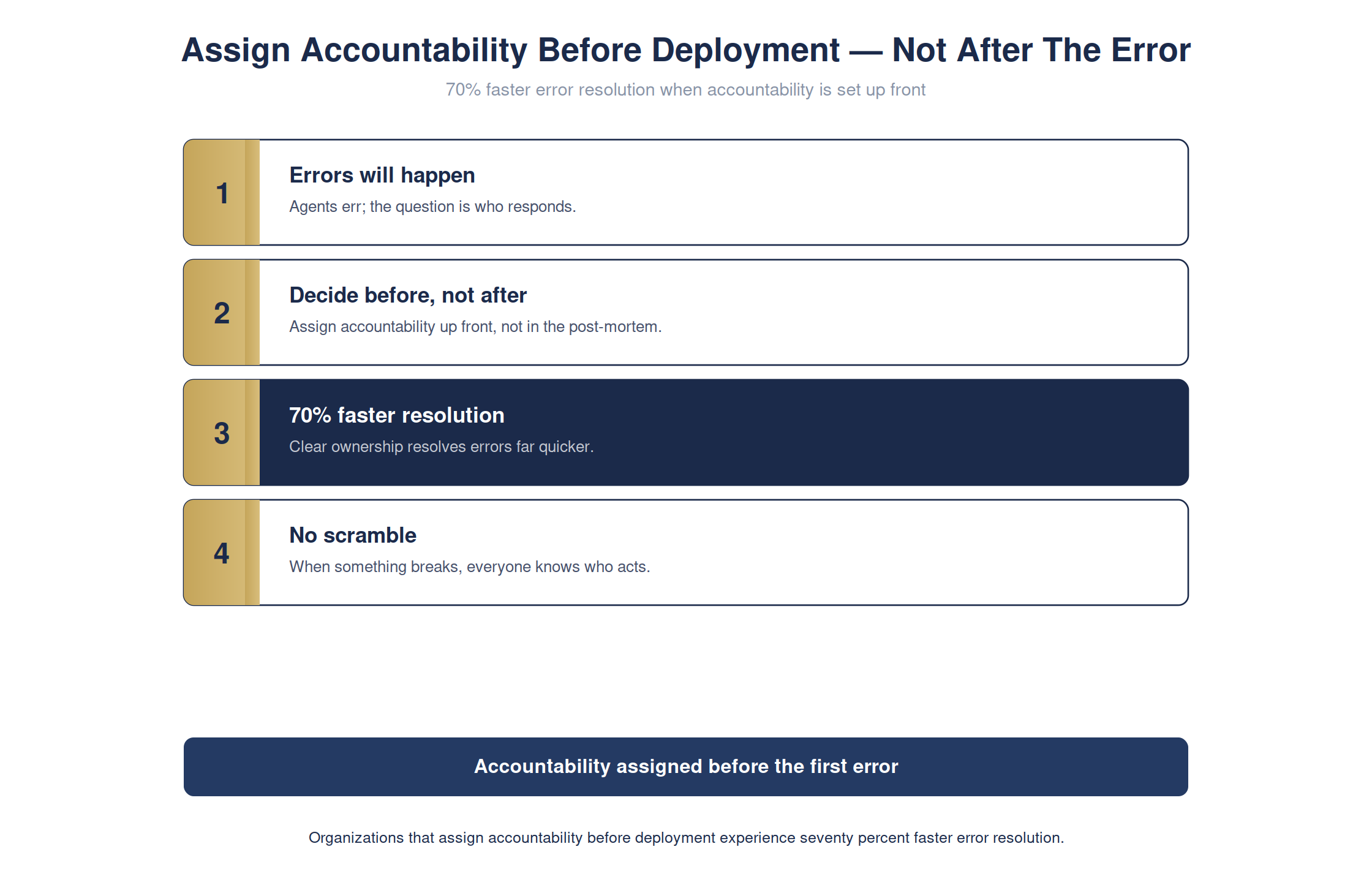
The full detailed chart. Condensed for print legibility in the book; shown here at full size.
Sorting out accountability in the middle of an incident wastes the hours that matter most. Settling it before deployment turns a scramble into a known response.
Leading agents · accountability when agents errready
Accountability set before deployment resolves errors far faster:
Accountability
errorswill happen
decide who respondsbefore, not after
resolution70% faster
incidentknown response, not a scramble
Organizations that assign accountability before deployment experience seventy percent faster error resolution.
For the technical reader — the command, and how to verify it yourself
# one line · you do not need to run this
see walkthrough
see walkthrough
see walkthrough
# -> accountability assigned up front, resolving errors 70% faster
# -> accountability assigned up front, resolving errors 70% faster
Full step-by-step is in Appendix RX: Hands-On Demonstrations in the book.