SIX
See It Work · Book 10 · Scaling AI Agents · Chapter 5
Know what you spend, know what you get
Agent costs — tokens, compute, APIs — are trivial at pilot scale and a real budget line item at enterprise scale. The discipline: real-time cost dashboards, per-team budgets with caps that hold, and dynamic model routing (route routine work to cheap models; reserve the expensive ones for hard problems).
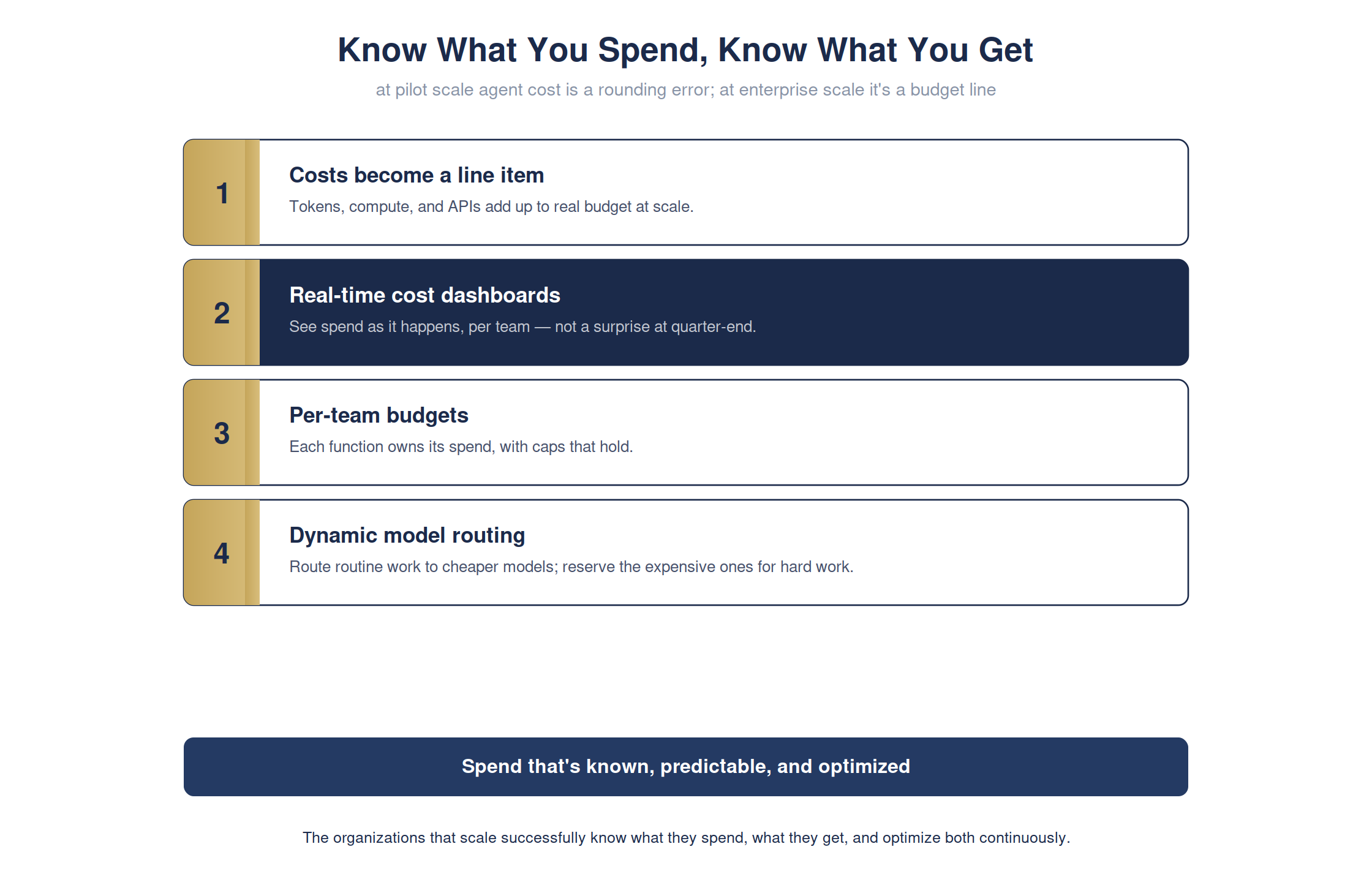
The full detailed chart. Condensed for print legibility in the book; shown here at full size.
Uncontrolled agent cost becomes the fastest-growing line item in the budget. The organizations that scale well aren't the biggest spenders — they're the ones who know what they spend, what they get, and optimize both continuously.
Platform Console · cost managementready
Cost discipline at scale is visibility plus budgets plus routing:
Cost Management
pilot vs enterpriserounding error → budget line
visibilityreal-time cost dashboards
budgetsper-team caps that hold
routingcheap models for routine work
Successful scalers know what they spend and what they get — and optimize both continuously.
For the technical reader — the command, and how to verify it yourself
# one line · you do not need to run this
see walkthrough
see walkthrough
see walkthrough
# -> spend made visible, budgeted, and routed by need
# -> spend made visible, budgeted, and routed by need
Full step-by-step is in Appendix RX: Hands-On Demonstrations in the book.