SIX
See It Work · Book 11 · AI Agents for M&A · Chapter 3
From a quarterly spreadsheet to continuous deal radar
Most corporate-development teams keep a target list in a spreadsheet, review it quarterly, and refresh it when the CEO asks 'what's out there?' A screening agent makes target identification continuous: it watches thousands of signals — funding rounds, leadership changes, financial filings, news — all the time, not once a quarter.
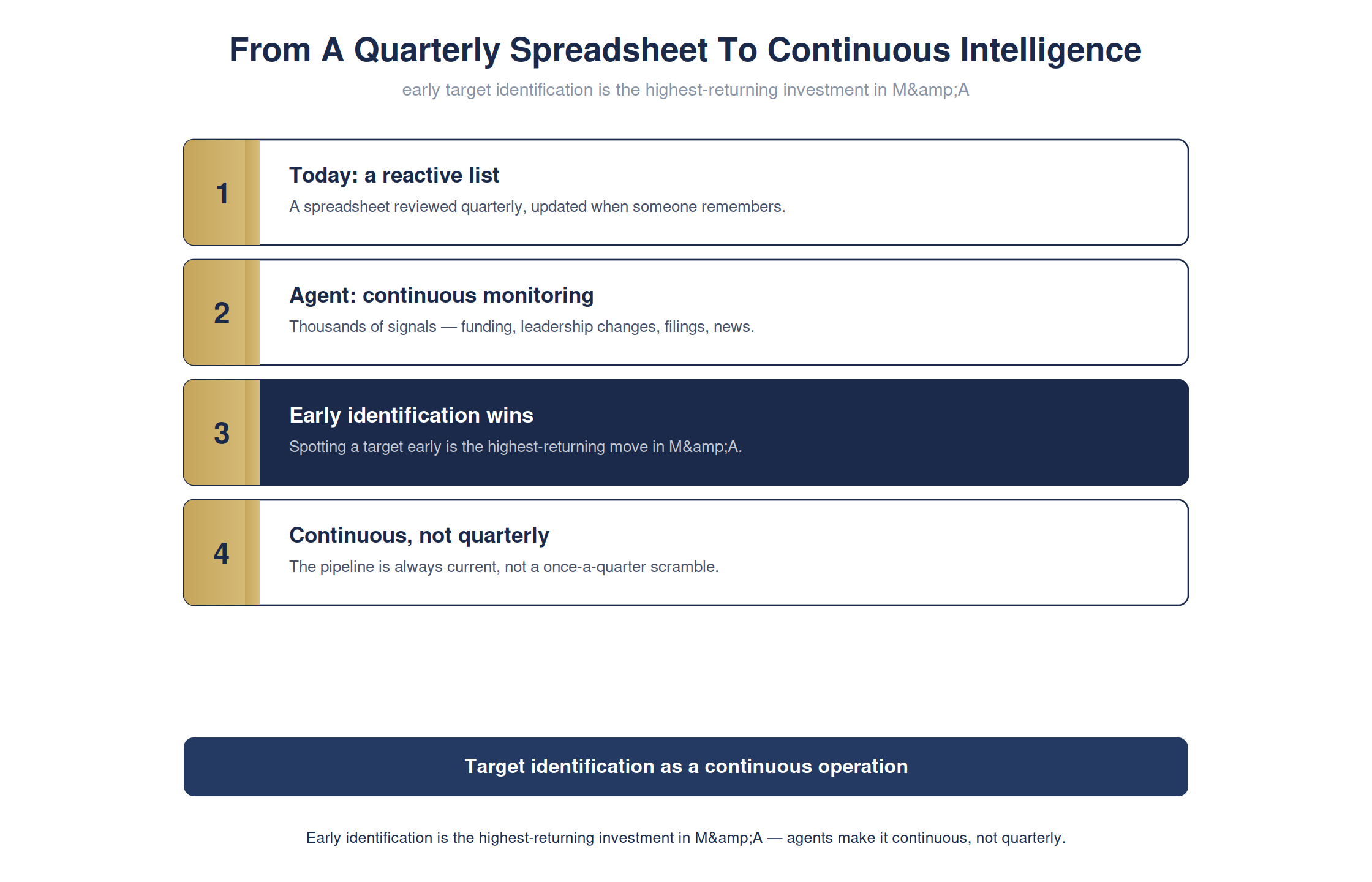
The full detailed chart. Condensed for print legibility in the book; shown here at full size.
Spotting the right target early is the highest-returning investment in M&A — the best deals are found before they're on the market. A quarterly spreadsheet misses them; a continuous radar doesn't.
Deal room · continuous screeningready
Screening becomes a continuous operation, not a quarterly refresh:
Deal-Flow Screening
todaya quarterly spreadsheet
agentmonitors thousands of signals
strategic fitscored as things change
payofffind targets early
Early identification is the highest-returning investment in M&A — agents make it continuous, not quarterly.
For the technical reader — the command, and how to verify it yourself
# one line · you do not need to run this
see walkthrough
see walkthrough
see walkthrough
# -> target identification as a continuous radar, not a quarterly list
# -> target identification as a continuous radar, not a quarterly list
Full step-by-step is in Appendix RX: Hands-On Demonstrations in the book.