SIX
See It Work · Book 11 · AI Agents for M&A · Chapter 4
The Quality-of-Earnings that defends itself
The quality-of-earnings memo is the heart of your deal case. The real question isn't whether it's right today — it's what backs it when the audit committee re-opens it in six months.
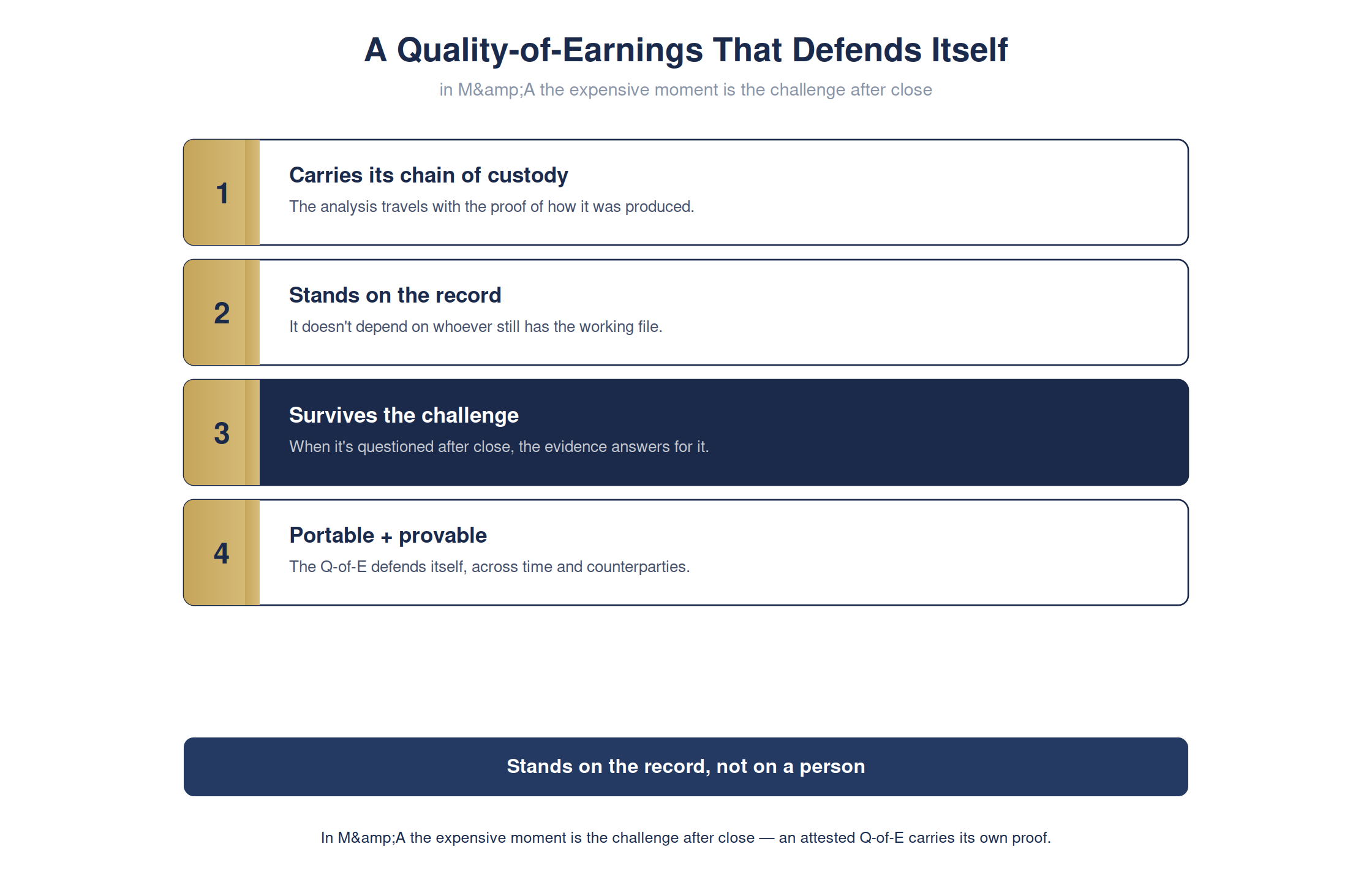
The full detailed chart. Condensed for print legibility in the book; shown here at full size.
A memo is an assertion. When a number is challenged post-close, you need the work behind it — every normalization, every adjustment — traceable, not reconstructed from someone's working files.
Deal Room · financial DD sessionready
The analysis produced an artifact, not just a document. Here's the receipt:
Quality-of-Earnings Artifact
artifactquality_of_earnings
normalized_ebitdaattested
chain_of_custodytrue
survives_audit_committeetrue
Re-verifiable on demand — so the Q-of-E is evidence, not a claim you have to re-defend from scratch.
For the technical reader — the command, and how to verify it yourself
# one line · you do not need to run this
python examples/compliance_cfo_demo.py
python examples/compliance_cfo_demo.py
jq '.compliance_attestation.summary.action_class' memory/*_summary.json
# -> produce_forecast_artifact
# -> produce_forecast_artifact
Full step-by-step is in Appendix RX: Hands-On Demonstrations in the book.