SIX
See It Work · S3 Vol 3 · Helix · Chapter 5
You approve the actual change — not a sentence about it
Most systems that "ask for approval" show you a sentence about what will happen and a button. You approve the sentence, not the act. Atrium shows you the act — the real artifact — beside the prose that produced it. Nothing reaches production without passing this preview.
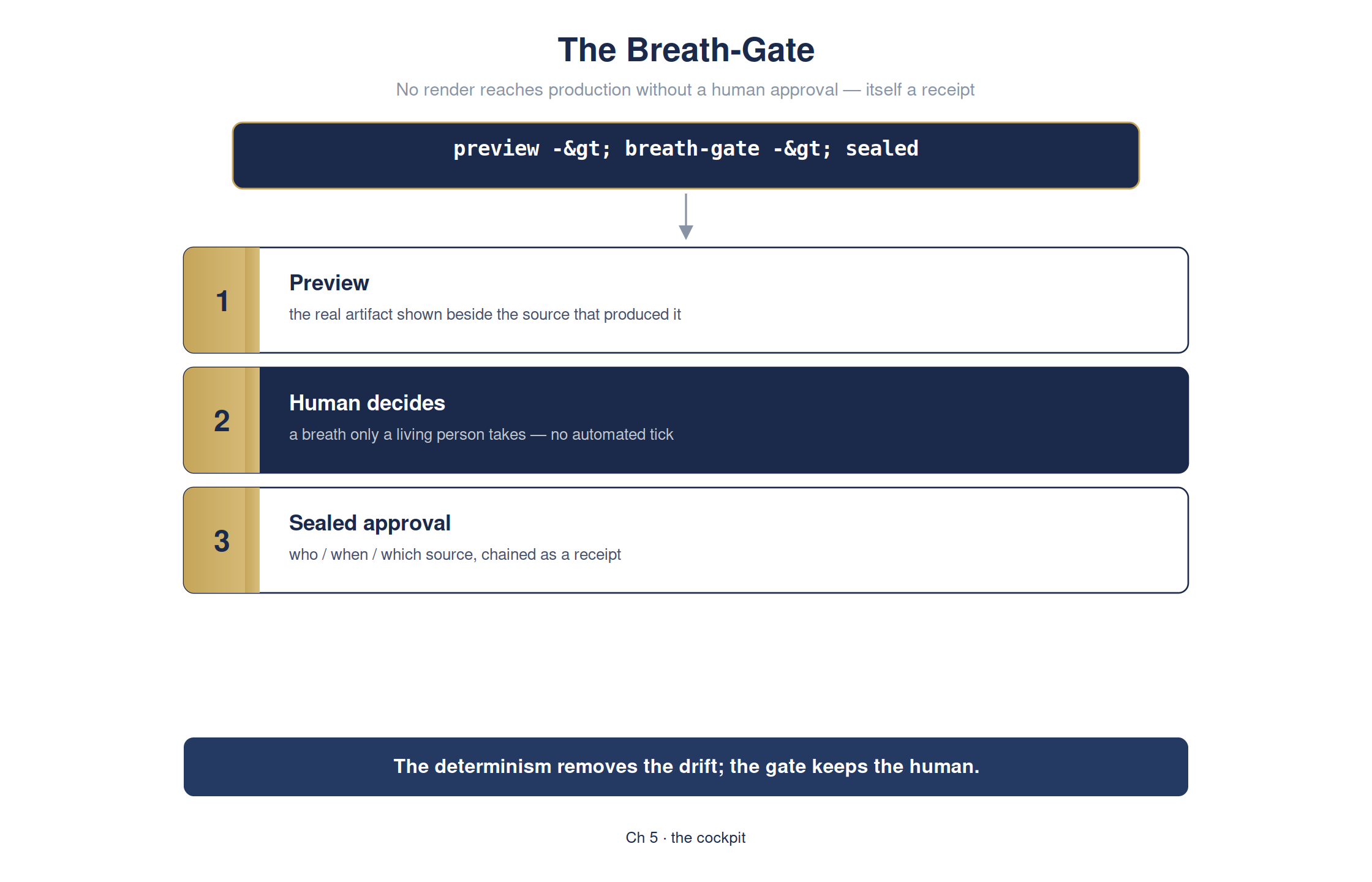
The full detailed chart. Condensed for print legibility in the book; shown here at full size.
The decision is a breath-gate: a deliberate human approval that records who approved, when, and against which sealed source — so the approval is as checkable later as any artifact. The thing you approve and the thing that ships are the same object.
The gate, with the real artifact in viewready
Here's a real, sealed breath-gate from this book's own construction:
A sealed human gate
whata rendered change, previewed in full
approved bya named human (primacy)
againstthe exact sealed source version
the approvalitself a receipt
The determinism removes the drift; the gate keeps the human.
For the technical reader — the command, and how to verify it yourself
# one line · you do not need to run this
see walkthrough
see walkthrough
preview -> breath-gate -> sealed
# -> a human approval that is itself a sealed receipt
# -> a human approval that is itself a sealed receipt
Full step-by-step is in Appendix RX: Hands-On Demonstrations in the book.